Showing posts with label The Great Kings. Show all posts

Sunday, August 21, 2011

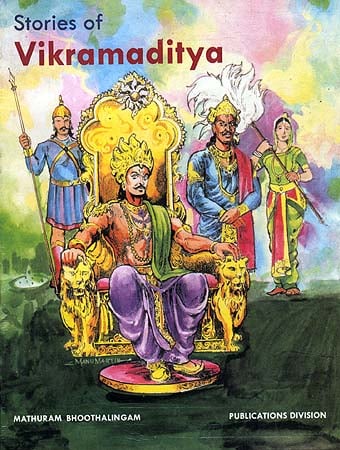
Samrat Vikramaditya


'The creator of an era.'
In the history of the world only a few can be described in these words.
Vikramaditya the Sixth is one of them.
We must have some way of keeping count of the years, mustn't we? Otherwise, when we think of an incident, how can we explain when it happened?
Generally we follow the Christian era. 1947 means one thousand and nine hundred and forty seven years after the birth of Christ. (The Christian Era was followed only by the Christians of the West. It came to us with the dawn (British rule in India). This means Jesus Christ was the creator of an era.
The Government of India now follows the Shalivahana Shaka or Era. It started 78 years after the Christian Era. It takes its name from King Shalivahana. He was the creator of an era.
About 850 years ago the 'Chalukya- Vikrama Era' was in vogue in Karnataka. Vikramaditya the Sixth came to the throne on the 26th of February 1077A.D. The Chalukya-Vikrama Era commenced from that date.
The history of Karnataka extends to more than two thousand years. Many dynasties came to power during these centuries. The Chalukyas are one of the greatest of these. Twice in the history of Karnataka they were prominent. The first time they grew powerful Badami or Vatapi was their capital. After 250 years of powerful rule the Rashtrakutas of Manyakheta defeated them. A thousand years ago, in 973, Tailapa the Second of the Chalukya Dynasty became independent. Kalyana was his capital. He was very powerful. He had to face many enemies but he defeated all. Many battles were fought between him and Paramara Munja of Malwa. Munja was defeated and died. Their battles were so terrible that poets have sung their heroism and glory in their poems. The valiant Tailapa ruled for the welfare of the people. Ranna, one of the greatest poets of Kannada, was in his court.
Ranna is famous for the power of his language. He has narrated the story of the duel between Bheema and Duryodhana who fought with maces, and the victory of Bheema and the defeat of Duryodhana. Ranna has compared his patron king Satyashraya, the son of Tailapa, to Bheema. Satyashraya was as powerful as his father was. He subdued all his enemies. For about 225 years the Chalukyas ruled once again in Karnataka. Vikramaditya the Sixth who proved to be a genius as a warrior and as a king belonged to this dynasty.
Vikramaditya’s greatness came to light even when he was still young. He said 'no' when the high position of the Yuvaraja was offered to him. Someshwara the First was Vikramaditya's father. He had three sons Someshwara the Second, Vikramaditya the Sixth and Jayasimha the Fourth.
From the very beginning Vikramaditya was very bright and bold. His father was very proud of him. When Someshwara the First ascended the throne he was surrounded by many enemies in the neighboring states. There was utter enmity between him and the Chola king Rajadhiraja. They fought repeatedly. In the end Rajadhiraja died. The other states, too, attacked the Chalukya kingdom. So, Someshwara realized that it was not easy task for any one whom ascended the throne to defend and to retain it.
Someshwara always thought that only a hero of heroes could keep the throne. Someshwara was watching his sons to decide which of them was fit to be his successor. His eldest son Someshwara the Second was not a strong man. Vikramaditya was a veritable lion. So the king thought that he was fit to be his successor. 'This boy can defend the kingdom and protect the people' thought the king.
King Someshwara was growing old. He thought it would be better if one of his sons became the Yuvaraja or the Crown Prince. He, the king, himself would have assistance in defending the state and also in the government; the subjects also would begin to respect him as their future king and the boy himself would get the training needed to rule the kingdom.
The boys completed their education. One day the king sent for Vikramaditya. He said, "My boy, you will be my successor. When I am alive I want you to be Yuvaraja. My burden will be less, and you too, will gain experience."
A lad just on the threshold of youth; the high place of the Yuvaraja had come to him, unsought.
How tempting! How overjoyed should he have been!
I do not want to be the Yuvaraja. Someshwara is elder to me. Give him the place," said the boy.
The king was astonished and overjoyed. He was all admiration for his son. He blessed his son.
The eldest son Someshwara Second became the Yuvaraja.
Though Vikramaditya was not the Yuvaraja he had to shoulder son responsibilities. The petty states in India were always fighting among themselves. The Paramara king, Bhoja of Malwa, died. Two persons, Udayaditya and Jayasimha, fought for the throne. The former sought the help of the Chola king. The latter requested Someshwara the First to help him. The Chalukya king sent an army led by Vikramaditya to assist Jayasimha. Vikramaditya entered Malwa, defeated Udayaditya and put Jayasimha on the throne. On his way back he camped on the banks of the river Krishna. There he received the sad news of his' father’s death. His father had been drowned in the river Tungabhadra. Vikramaditya was overcome with grief. He returned to Kalyana after the religious rites connected with his father’s death were completed.
In 1068 AD, his brother Someshwara the Second ascended the throne and assumed the title of 'Bhuvanaika Malla' (The Matchless Wrestler of the World).
The new king was no much experienced in wars. The enemies thought it was the most favorable time for them to attack his kingdom. Veerarajendra, the Chola king, led an army against him. The Chalukya army pushed back the Chola army; Veerarajendra ran away. Someshwara the Second divided his kingdom into many zones. He appointed his brothers to look after these regions. The Yuvaraja, Vikramaditya, went to Gangavadi and Jayasimha the Fourth to Nolambasindavadi as the representatives of the king.
Do you remember that Vikramaditya had helped Jayasimha of Malwa? In the second battle Udayaditya defeated Jayasimha and became the king of Malwa. Jayasimha again sought the help of Someshwara the Second. This time he did not send his brother because he did not trust him. Someshwara was afraid that Vikramaditya would gain the help of the king of Malwa and would became more powerful; he feared Vikramaditya would be a danger to him. So Someshwara himself led an army to help 'Jayasimha, but in vain. Udayaditya defeated Someshwara who returned in shame.
The Chalukyas had already defeated Virarajendra, the Chola king. He thought he could capture the Chalukya kingdom in the absence of the king, who was in Malwa. So he marched at the head of an army and captured a town called Rattepadi. But he had completely overlooked the prowess of the Yuvaraja. Vikramaditya, with an army, challenged the Chola army. Instead of fighting, the Chola king entered into negotiations with Vikramaditya and gave him his daughter in marriage. He also gave him the Karnataka region, which was under his control. Vikramaditya knew that his brother did not trust him. Thinking his Chola alliance would be an asset against his brother, he gave consent to the marriage.
There is a saying 'Man proposes but God disposes.' Vikramaditya found that his alliance was no longer an asset but a liability. Instead of the Chola king helping him, Vikramaditya himself had to help the Chola king. After the death of Virarajendra, the subjects revolted against Vikramaditya's brother-in-law Adhirajendra. He could not suppress the revolt. Vikramaditya helped him in securing the throne. (But Adhirajendra lost the throne soon, because the Eastern Chalukya king, Rajendra the Second, defeated him.)
The king, Someshwara the Second, continued to distrust his younger brother, Vikramaditya. Because of this distrust, he had not sent his brother to help the king of Malwa but, instead, himself led the army, but came back defeated. It was a period of incessant wars. So many kings were waiting to snap up the Chalukya kingdom. If the king was not powerful, there was every chance of his losing the kingdom. The people were not happy in such times. They had to live in the shadow of danger. They wanted a powerful ruler to protect them. Someshwara the Second was neither powerful nor interested in his duties. But Vikramaditya, unlike his brother, was interested in the welfare of the people. Things went from bad to worse 'in the kingdom. Vikramaditya thought' of taking charge of the kingdom.
But this was not easy. After all Someshwara was a king. Even he had his supporters. Vikramaditya had to act thoughtfully and cautiously.
Some chieftains were loyal to the king, Someshwara. Vikramaditya thought winning over these persons to defeat brother. He married the daughter Kadamba Jayakeshi of Goa and won support. He made friends with some others. Then he assumed the title of 'Tribhuvana Malla'.
The title 'Tribhuvana Malla' (Meaning, 'The Wrestler of the Three Worlds) was used by emperors. The king, Someshwara, was upset when his brother assumed the title. The king thought that the friendship of his brother with his vassals was a sign of danger. He made friends with Kulottunga the First, the Chola king. Now if there was a conflict, Vikramaditya would find himself between two enemies-his brother Someshwara the Second at home and Kulottunga the First, the Chola king.
Kulottunga laid seige to Kolar, which belonged to Vikramaditya. So the war began. The Chola army was defeated. Vikramaditya wanted to make his position strong before Kulottunga could recover and come to the help of his brother. So he declared war against his brother and defeated and imprisoned him. What happened to Someshwara thereafter we do not know.
By this time Vikramaditya had gained good experience by taking part in many wars for about twenty years. He had fought for his father and his brother, and defended the kingdom. He had never known defeat.
The unexcelled, valiant Vikramaditya was crowned king on the first day of the bright half of the month of Chaitra in the year Pingala, corresponding to the 26th of February 1077. On that day began the 'Chalukya--Vikrama Era'.
During Vikramaditya's reign there were constant wars between states. He, too, was not without enemies. Some kings were jealous of him. But the people enjoyed peace and prosperity during the greater part of his reign. Kulottunga tried his best to undermine his prosperity. And Vikramaditya, too, tried hard to weaken him. After some time they gave up such attempts. So they lived for forty years without meddling with each other's affairs, But in the last days of Vikramaditya's rule, peace was disturbed and he had to use force. A small kingdom called Vengi belonged to the Chola king- Kulottunga. After the death of Kulottunga, Vikramaditya sent his army and captured Vengi.
Jayasimha the Fourth was Vikramaditya's younger brother. Vikramaditya treated his brother with affection even after he became the king. Jayasimha, too, was a great support to his brother. The king installed Jayasimha as the Yuvaraja and sent him to Banavasi as his representative. He had full faith in his brother. Some of the territories conquered by the king were added to his province and the king made his brother the governor of this bigger province. The king Jayasimha behaved like a worst dictator; and he used his power absolutely in corruptness. He never used it for the welfare of the state or for the use of his own people. This proved true in the life of Jayasimha. He was at first good and loyal. But his ambition grew with the increase of power. He envied his brother and conspired against him. So he forgot his duty as the representative the king. He forgot that he was there to look after the welfare of the people. He began to harass the people and looted the rich. He strengthened his army. He entered into an alliance with the cruel tribal people living in the forests. He-tried to bring about quarrels among his brother's friends.
Those who loved Vikramaditya and were loyal to him reported to him what was happening.
Vikramaditya could not believe that his beloved brother was working against him. Though Vikramaditya had been faithful to his elder brother, he had been suspected. The brothers had fought. The king did not want to fight with his younger brother, too. Someshwara had misunderstood Vikramaditya and had suspected him without reason. Vikramaditya did not want to commit the mistake Someshwara had committed. He sent some officers to find out the truth.
The spies returned with the information that Jayasimha was working against the king.
The king was very unhappy. He did not like to use force against his brother. So he sent a message to Jayasimha. He reminded him that, though he aid not have the title of a king he had all the power and the work of a king. He told him that it would be foolish for brothers to fight, and advised him to be affectionate and loyal to his brother.
Jayasimha could not understand the love of his brother. He thought his brother was weak and, therefore, had sent such a friendly message. He thought he could defeat the king and set out with an army. He reached the banks of the river Krishna without any opposition. A few chieftains who were under Vikramaditya joined him and this gave him added hopes. He harassed the people of the territories that came under his control. He sent an insulting message to his brother.
Vikramaditya himself led his army and marched towards the Krishna. Even then he did not have the heart to fight with his brother. He tried to make peace with him, but in vein. The arrogant Jayasimha called his brother weak. The battle commenced. At first Jayasimha had the upper hand. The king's soldiers ran away from the battlefield. The king moved on an elephant. He collected his scattered soldiers and encouraged them to fight. Jayasimha's army was frightened. The defeated Jayasimha ran away from the battlefield and tried to escape into the forest. The king captured Jayasimha’s horses and elephants. His wives were imprisoned and in the end the king’s soldiers, too, captured him.
Jayasimha was brought in chains before the king. He was so ashamed that he could not look at his brother. He stood with his head bowed. He thought of the past. Vikramaditya had made him the Yuvaraja; he had added what he had won to his brothers territories and made him the governor. But Jayasimha, instead of fall being grateful, had conspired against him. He harassed people. In spite of this the king had sent a message of affectionate advice. But how had Jayasimha behaved? He had called his-brother weak, and sent an insulting message. Jayasimha felt I deserved any punishment the king gave him, because he had committed so many offences, not one or two. Would not the king naturally punish him?
Jayasimha bent down his head in shame, and trembled in fear.
Vikramaditya gazed upon his younger brother. He felt great pity for him. He got his chains removed. He spoke to him with affection. "Do not be afraid, you are not in danger," he assured him.
To some people power is like wine. Without power they are wise and behave sensibly. But once they get power they behave like mad men. Jayasimha was one such man. Before he got power he loved and was loyal to his brother. With the increase of power he behaved like a drunken man.
Vikramaditya pardoned his brother. But he did not give him again the wine of power. He appointed Mallikarjuna, the son of Jayasimha, in his place. This was in 1082.
It would be interesting to contrast the three brothers - Someshwara, Vikramaditya and Jayasimha, and to study how they behaved when they got power. Someshwara forgot that Vikramaditya could easily have become the Yuvaraja; he had refused, and had requested his father to make Someshwara the Yuvaraja. Someshwara was suspicious of Vikramaditya. As a result, he brought trouble upon himself. Jayasimha, too, had become foolish and overambitious once he got power. Vikramaditya remained sane and merciful even when he had power, and had been victorious.
Vikramaditya had to fight many battles. The three sons of Udayaditya" Jagaddeva, Lakshmanadeva and Naravarma quarreled among themselves. Vikramaditya the Sixth helped Jagaddeva and made him king. But a little later Naravarma usurped the throne. Again the Chalukya king went to the help of Jagaddeva and gave him back the throne. He loved him as his own son.
Jagaddeva was moved by his affection. He gave up his throne and lived as courtier of Vikramaditya. Jagaddeva was entrusted with the task of looking after the territories, which the king had won from the Paramours. Jagaddeva fought many battles for the king.
Vikramaditya and his vassals had to fight against the Hoysalas. Vishnuvardhana was a king of the Hoysala dynasty. Within five or six years of coming to the throne he extended his kingdom and earned the title 'Tribhuvana Malla'. With his army he crossed the river Tungabhadra. By than Vikramaditya had ruled for over forty-five years and was quite old. But when the state was threatened, he grew young in spirit. He defeated Vishnuvardhana and his allies in 1122. He assumed the title 'Vishnuvardhana'. In addition to this he had to fight many battles.
All these happenings show how, in those days, every state was constantly in danger of attack and had to be always ready to fight for survival. Vikramaditya was a hero of heroes, and never tasted defeat.
He was not eager to fight or to shed blood. But, from youth to old age, he was forced to fight again and again. He extended the kingdom upto Hassan, Tumkur and Kadapa in the south, Khammammet in the south-east, and the Narmada in the north. He himself led his army. He was a model to his soldiers and his example inspired them. He led his army with great skill. On the whole he 'Vikramaditya' and justified his titles 'Tribhuvana Malla'.
A king may be very powerful, but is that enough? What is the use if he is rich and powerful without doing any good the people? The main interest of the rulers must be the welfare and the happiness of the people.
The man who, when he has wealth and power, does not think of his pleasures and pomp, and who tries to do good to the common man is truly great. As a man's power and money increase, as he rises higher and higher, his own pleasure and pomp may become important to him; if that does not happen, he deserves to be honoured. Those who rule should seek to become kings of their subjects’ hearts
Even during his military campaign Vikramaditya did not forget the safety his subjects. Naturally, during wars people are worried and anxious. In those days the army marching from place to place used to trouble the people. The soldiers used to destroy the crops and carry away the belongings of the poor villagers. The victorious army, of course, would enter the houses of the defeated people and plunder them, set fire to houses and kill people mercilessly.
Vikramaditya maintained good discipline in his army and saw to it that the conquered were not troubled. Even during their march, the soldiers did not trouble the people. Usually those defeated would run away for fear of the victorious army and the city would be destroyed. But Vikramaditya took care to see that in the territories he captured there was not much trouble or confusion. The routine went on undisturbed. Agriculture, trade, travels and business went on as usual. People were not afraid of the victorious army. In fact, quite often it was only when the soldiers marched through their place that the people came to know that a war was going on. There was no cause for confusion or anxiety otherwise.
The welfare of the people was the cornerstone of Vikramaditya's rule. He visited different parts of his kingdom enquire the welfare of his subjects. He stayed in different towns for a few days so that he could find out for himself how the people fared and what their problems were. He gave them the opportunity explains their difficulties. Kalyana was capital. Yetageri, Vikramapura and Vijayapura were sub-capitals. He spent few days in each of these towns during his travels.
However capable a ruler may be, he cannot himself attend to all the work, can he? The ruler has to choose officers for different types of work and to be in charge of the different parts of the kingdom. They must be given some power; they cannot run to the king for every decision. But the officers must be loyal to the king; they should be made to feel that they will be punished if they do not use their powers justly and if they do not take proper care of the people. So any ruler should-1) choose the officers with great care, 2) give them as much power oil as their work requires and 3) watch with care how they conduct themselves. Vikramaditya had sincere, efficient and able ministers and generals.
The most astonishing fact is that many of his officers were scholars; they were interested in literature, music and other fine arts; but they were also excellent soldiers. In times of war they went to the battlefield. In times of peace they helped the king in his administration and encouraged the development of education. They encouraged men of letters. The emperor himself governed certain provinces. The rest were under the control of chieftains obedient to him. The king appointed his brothers and his sons, governors of the provinces, which were under his direct control. He gave the enough powers. He punished those who did not use their powers justly and wisely. He rewarded those officers whom though of the good of the people. Ananthapa who was his representative in Vengi was, loyal to him and loved his subjects. In return for his good administration the king made him master of Puligere, Belwal Banavasi and other places.
Among Vikramaditya's subjects were followers of different faiths--Shaivism, Vaishnavism and Jainism. The king himself was a follower of Vaishnavism. But he respected at the three faiths equally. The subjects were at liberty to choose any of the faiths. The king was god-fearing and generous.
In Vikramaditya's, days women held high places and took part in the administration.
There is an impression that in India women did not have much freedom and were practically imprisoned in the kitchen. But this is not true. Even in ancient India there were women famous for their learning. It is clear from the pages of Indian history that many women were efficient rulers and even led armies on the battlefield and fought valiantly. The place accorded to women in the days for Vikramaditya is truly surprising. Women enjoyed all the necessary facilities education. They excelled in music, dancing and other fine arts. Besides, they helped the king in governing the state. His queen Ketaladevi ruled over Shiraguppe, Kolanoor and other cities. Dronapura was under the rule of Lakshmi, another queen. Yet another queen, Chandralekha, did much in the field of education. Mailala Mahadevi built a temple for the god Malleshwara.
The matchless warrior Vikramaditya was also a very generous patron of education and the fine arts. There were many scholars and poets in his court. The poet Bilhana came from Kashmir and stayed in his court. The king honoured this poet with the title 'Vidyapati'. Bilhana wrote 'Vikramankadeva Charita' in Sanskrit. The poem reflects his grandeur and the system of administration of Vikramaditya and the social life of the people. Vignaneswara was another great scholar of his court; he wrote the famous book 'Mitakshara'. Vikramaditya built a city called Vikramapura and constructed a magnificent temple there.
Vikramaditya means the Sun of Valor, that is, one who is powerful as the Sun. Vikramaditya was indeed powerful; and he brought the light of security and peace too.
The people enjoyed peace and prosperity under this valiant king, who loved his subjects. The capital Kalyana was rich and prosperous; splendid palaces and beautiful temples and grand trunk roads made it a magnificent city Vikramaditya became a model for the rulers of all countries and ages. He showed how powerful a king should be and how the king should use his power for the welfare of the people. He showed that the hand that holds the sword should also offer justice and protect the good. He respected all faiths equally. He encouraged poets and artists. He gave all facilities for the education of women. So he ruled for about fifty years in power and wisdom, and won for himself a highly honored place in the history of India. Who if not so wise and great a ruler can inaugurate a new era?.

Asoka


Asoka was one of the most powerful kings of the Indian subcontinent. A ruler of the Mauryan Empire, Ashoka ruled over the country from 273 BC to 232 BC. The reign of Emperor Asoka covered most of India, South Asia and beyond, stretching from present day Afghanistan and parts of Persia in the west, to Bengal and Assam in the east, and Mysore in south. However, the Battle of Kalinga changed King Asoka completely. From a power hungry emperor, he turned into a Buddhistfollower and started preaching the principles of Buddhism throughout the world. Read on this biography to know more about the life history of 'Ashoka the Great':
Early Life
Asoka was born in 304 BC, to Mauryan Emperor Bindusara and a relatively lower ranked queen, Dharma. The legend associated with the emperor goes that his birth had been predicted by Buddha, in the story of 'The Gift of Dust'. BuddhistEmperor Ashoka had only one younger sibling, Vitthashoka, but, several elder half-brothers. Right from his childhood
 days Ashoka showed great promise in the field of weaponry skills as well as academics.
Accession to the Throne
Asoka quickly grew into an excellent warrior general and an astute statesman. His command on the Mauryan army started growing day by day and because of this, his elder brothers became suspicious of him being favored by Bindusara as the next emperor. The eldest son of Bindusara, Prince Susima, convinced him to send Asoka to Takshashila province (in Sindh) to control an uprising caused by the formation of different militias. However, the moment Ashoka reached the province, the militias welcomed him with open arms and the uprising came to an end without any fight. This particular success of Asoka made his elder brothers, especially Susima, more insecure.

Susima started inciting Bindusara against Ashoka, who was then sent into exile by the emperor. Asoka went to Kalinga, where he met a fisherwoman named Kaurwaki. He fell in love with her and later, made Kaurwaki his second or third wife. Soon, the province of Ujjain started witnessing a violent uprising. Emperor Bindusara called back Ashoka from the exile and sent him to Ujjain. The prince was injured in the ensuing battle and was treated by Buddhist monks and nuns. It was in Ujjain that Asoka first came to know about the life and teachings of Buddha. In Ujjain, he also met Devi, his personal nurse, who later became his wife.

In the following year, Bindusura became seriously ill and was literally on his deathbed. A group of ministers
, led by Radhagupta, called upon Ashoka to assume the crown. In the fight that followed his accession, Ashoka attacked Pataliputra, now Patna, and killed all his brothers, including Susima. After he became the King, Ashoka launched brutal assaults to expand his empire, which lasted for around eight years. Around this time, his Buddhist queen, Devi, gave birth to Prince Mahindra and Princess Sanghamitra.
The Battle of Kalinga
The battle of Kalinga (now Orissa) became a turning point in the life of 'Asoka the Great'. The exact reason for the battle is not known. However, it is believed that one of Ashoka's brothers took refuge at Kalinga and this enraged Asoka, who launched a brutal assault on the province. The whole of the province was plundered and destroyed and thousands of people were killed.
Embracing & Spreading Buddhism
It is said that after the battle of Kalinga was over, King Asoka went on a tour of the city. He could see nothing except burnt houses and scattered corpses. This was the first time in his life that Emperor Ashoka realized the consequences of wars and battles. It is said that even after he had returned to Patliputra, he was haunted by the scenes he saw in Kalinga. Even his queen, Devi, who was a Buddhist, left him after seeing the brutality at Kalinga.

It was during this time that he embraced Buddhism under the Brahmin Buddhist sages, Radhaswami and Manjushri. After adopting Buddhism, Asoka started propagating its principles throughout the world, even as far as ancient Rome and Egypt. Infact, he can be credited with making the first serious attempt to develop a Buddhist policy.
Policy
Buddhist Emperor Asoka built thousands of Stupas and Viharas for Buddhist followers. One of his stupas, the Great Sanchi Stupa, has been declared as a World Heritage Site by UNECSO. The Ashoka Pillar at Sarnath has a four-lion capital, which was later adopted as the national emblem of the modern Indian republic. Throughout his life, 'Asoka the Great' followed the policy of nonviolence or ahimsa. Even the slaughter or mutilation of animals was abolished in his kingdom. He promoted the concept of vegetarianism. The caste system ceased to exist in his eyes and he treated all his subjects as equals. At the same time, each and every person was given the rights to freedom, tolerance, and equality.
Missions to Spread Buddhism
The third council of Buddhism was held under the patronage of Emperor Ashoka. He also supported the Vibhajjavada sub-school of the Sthaviravada sect, now known as the Pali Theravada. He sent his missionaries to the following places:
  • Kashmir - Gandhara Majjhantika
  • Mahisamandala (Mysore) - Mahadeva
  • Vanavasi (Tamil Nadu) - Rakkhita
  • Aparantaka (Gujarat and Sindh) - Yona Dhammarakkhita
  • Maharattha (Maharashtra) - Mahadhammarakkhita
  • "Country of the Yona" (Bactria/ Seleucid Empire) - Maharakkhita
  • Himavanta (Nepal) - Majjhima
  • Suvannabhumi (Thailand/ Myanmar) - Sona and Uttara
  • Lankadipa (Sri Lanka) - Mahamahinda
His missionaries also went to the below mentioned places:
  • Seleucid Empire (Middle Asia)
  • Egypt
  • Macedonia
  • Cyrene (Libya)
  • Epirus (Greece and Albania)
Death
After ruling over the Indian subcontinent for a period of approximately 40 years, the Great Emperor Asoka left for the holy abode in 232 BC. After his death, his empire lasted for just fifty more years.

Chandragupta Maurya


Chandragupta Maurya was the founder of the Maurya Empire in India. He is credited with bringing together the small fragmented kingdoms of the country and combining them into a single large empire. As per the greek and Latin accounts, King Chandragupta Maurya is known as Sandracottos or Andracottus. During his reign, the Maurya Empire stretched from Bengal and Assam in the East, to Afghanistan and Balochistan in the West, to Kashmir and Nepal in the North and to the Deccan Plateau in the south. Read on this biography cum life history of Chandragupta Maurya to know more about the great king:


Conflicting Views about His Lineage
Chandra Gupta Maurya was born in 340 BC. However, there is not much information about his ancestry. Some of the historians believe that he was an illegitimate child of a Nanda prince and his maid, Mura. Others believe that Chandragupta belonged to Moriyas, a Kshatriya (warrior) clan of a little ancient republic of Pippalivana, situated between Rummindei (Nepali Tarai) and Kasia (Gorakhpur district of Uttar Pradesh). Two other views are that he belonged either to the Muras (or Mors) or to the Kshatriyas of the Indo-Scythian lineage. Last but not the least, it is also claimed that Chandragupta Maurya belonged to the Assakenoi or Ashvaka Kshatriya clan of Swat/Kunar valley. 

Early Life
There is not much information about the childhood days of King Chandragupta Maurya. As per the traditional records, Chanakya, a teacher at Takshila  University, found him in the Magadha kingdom. Thereafter, Chanakya brought Chandragupta to Takshila, where he took him under his guidance. Further reports state that Chandragupta once met Alexander the Great and told him on his face that the ruling of the Nanda Empire was faulty. 

Foundation of the Maurya Empire
A major part of the credit for the building of the Maurya Empire goes to Chanakya. He was a teacher at the Takshila University when Alexander started invading India. Since the King of Takshila and Gandhara had surrendered to Alexander, Chanakya sought help from other kings to unite and fight against him. Porus (Parvateshwar), a king of Punjab, challenged Alexander at the Battle of the Hydaspes River. However, he got defeated in the battle. Chanakya also sought help from Dhana Nanda, the ruler of Nanda Empire, but was refused. After this incident, he started instilling the idea of building an empire that could fight against foreign invasion into his disciple, Chandragupta. Chanakya became his chief adviser or prime minister. 

Conquests
Chandragupta Maurya defeated the Macedonian satrapies in the northwest of the Indian subcontinent in 317 BC. Thereafter, he turned his attention towards Northwestern India. Chandragupta allied with the Himalayan king Parvatka and launched an attack against Dhana Nanda of the Nanda Empire. The battle ended around 321 BC, with the siege of the capital city of Kusumapura and the conquest of the Nanda Empire. Thus was born the powerful Maurya Empire in Northern India. 

Conquest of Seleucus' Eastern Territories 
After the conflict with Seleucus in 305 BC, Emperor Chandragupta Maurya extended his empire towards Seleucid Persia. Through a treaty sealed in 305 BC, Seleucus gave up the country around the Indus River to Chandragupta, including the Hindu Kush, present day Afghanistan and the Balochistan province of Persia. In return, he received five hundred war elephants, increasing his military strength. 

Southern Conquests
After annexing the eastern Persian provinces Seleucus, Chandragupta's empire stretched across the northern parts of Southern Asia, from the Bay of Bengal to the Arabian Sea. Thereafter, began his conquests in south, beyond the Vindhya Range and into the Deccan Plateau. Most of the Southern Asia got united under the rule of Chandragupta Maurya. 

Death
It is believed that in the last days of his life, King Chandragupta Maurya gave up his throne and adopted asceticism under the Jain saint, Bhadrabahu Swami. He breathed his last in 298 BC at Shravanabelagola (in present day Karnataka), ending his days of self-starvation. A small temple marks the cave (called Bhadrabahu Cave) where he died. 

Successors
Chandragupta Maurya's son Bindusara succeeded him to the throne. He gave birth to Asoka, who went on to become one of the most powerful kings of the Indian subcontinent.

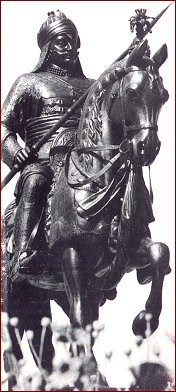
Maharana Pratap


Maharana Pratap, the eldest son of the founder of Udaipur Maharana Udai Singh was born to Sonagari Queen Jayawanti on Jyestha Sudi third day of Vikram Era 1597 (i.e. May 9, 1540) Sunday at 47 Ghati 13 Pal past sunrise. Born is Ardra Naksatra, his birth was considered not only auspicious but the astrologers also made the prediction that the child will bring shining glory to the name of the clan.

He was initiated into education and leasing worthy of a prince and, when adult, he mastered the skills in the use of arms and weapons including horse riding. But owing to mutual jealousy among the queens of Udai Singh, he was deprived of his father’s have and affection, and was forced live in a village below the ridge of Chittorgarh. His maternal grand father Akheraj Sonagar (pali) had died in the battle of Sumel Girari in 1600 Vikram Era. Thus, neither he received the from his father nor did he get maternal grand father’s care for long.

First Marriage of Pratap and Founding of Udaipur 
At around age of 17 years Pratap was married to Ajabade, the daughter of Rao Ram Rakh Panwar. Amar Singh was born to her in the month of Chaitra Sudi 7, Thursday of Vikram Era 1613 (i.e. 16 March, 1559). At this time Maharana Udai Singh had gone to Ekaling Ji for Darshana (holy Vision of the lord) and from there he moved towards village Ahar in the cause of hunting. After consultations and discussions with his chieftains and advisers he started construction of a palace and establishment of a city towards the north of present day Udaipur the ruins of which exist to-day, known as Moti Mahal 

Hero of the Age – Maharana Pratap 
The Third Saka (Supreme Sacrifice) of Chittor and Pratap
When emperor Akabar evivaded Chittor in 1967, Maharana Udai Singh abandoned Chittorgarh following the advice of his chief cans and Generals. Though Pratap desired to stay back and protect the fort but the chief fans and Generals did not agree to expose the future king of Mewar to the jows of death and sent him to mountains alongwith his father on the night of 23 febuary 1568 the last Jauhar (a ritualistic self emulation by the women in order to protect their chastity and honour before their warrior husbands march for the final and last assault) was organized and in the morning of the following day the warriors threw open the Fort gates and wade the supreme sacrifice (the Saka, in popular lane). With the fort fell to the hands of Akabar. Akabar not only ordered the killing of innocent residents women and children but also offended sentiments of Hindus by destroying and desecrating the temples and idols in the fort. 

This incident of Jauhar and Saka at Chittor made a deep impression on the heart of Pratap. He was full of hatred for Akabar who indulged in this merciless killing. The Supreme Sacrifice made by the women and the warriors for upholding the honour and respect of their nation family, clan and religion because the source of expiration for Pratap to resolve for a struggle ful life 
Repression of the Vagadiya Chauhans 
Pratap first demonstrated his bravery by attacking the Vagadiya Chauhans. In the battle at the banks of Som river Karansi the cousin of Rana Sanwaldas was killed. Being defeated the Vagadiya Chauhans Conceded a large part of Vagad lard to Mewar. This enhanced the fame of Pratap and the attention of the common masses and feudal heads started centering towards the browsing of Pratap. 

Coronation of Pratap 
Living for a while in the difficult mountain terrains at Kumbhaner alongwith his father, Pratap made his residence at Gogunda where Maharana Udai Singh died on 28 Feb.,1572. In accordance with the desire of Bhatiyani queen Dheer bai, Maharana Udai Singh had declared his son Jagamal as his heir apparent but despite strong desires of the queen and the Maharana, Jagamal could not realize his dreams. After the death of the Maharana Jagamal occupied the Royal Throne but he did not participate in the funeral rites the former ruler of Gwalior Ram Singh Tanwar enquired about Jagamal after which the noble heads came to know about Jagamal having been made the heir-apparent. At this point Man Singh Sonagare, the maternal uncle of Pratap raised objection and said to Rawat Sanga ( the predecenor of Devagarh nobles) – you Belong to the clan of Chunda therefore, this ought to have been decided after consultation with you. Then, Rawat Krishna das and Rawat Sanga said – “pratap is the eldest son, and worthy also, hence, he will be the Maharana.” After completing the last rites, the noble chieftains made Pratap to occupy the Royal Throne and spoke to Jagamal – “In your capacity as the younger brother, your seat is in front of the Royal Throne”. Thus, on 28 feb, 1572- the day of Holi Pratap’s coronation was performed at Gogunda Afterward, the coronation ceremony was celebrated at Kumbhalwer which was attended by Rao Chandra Sen (Jodhpur) the brother-in-low (Sister’s husband) of Pratap as Nell.

Making Kumbhalmer and Gogunda as centres, Pratap started ruling over Mewar. He conquered the CHHAPPAn area, defeating the rathors, then he ensured full protection of entire Godwad and the Arawali ranges. At that time, the territories lying to the North-east and South-east of Mewar had fallen to the hands of Akabar and almost all the kings of Rajasthan had accepted authority of Akabar, the only exception being Pratap who never bowed his head before the emperor. After Pratap’s coronation, Akabar kept sying over his activities for one year. Hoping that Pratap too will follow the path of other kings and will himself join the Royal service but this did not happen and Akabar decided to send emissaries to Pratap to prevail upon him 

Akabar Sends three Emissaries to make Pratap accept his authority 
First of all, at the orders of Akabar, Prince Man Singh Kachhawah came to Pratap lowing Gujarat in april 1573 and traveling via Eedar and Dungarpur, Pratap come to Udaipur from Gogunda and extended an affectionate wel-come to Man Singh near Udaipur. Though, Man Singh tried his best to prevail upon Pratap to come to the Royal court but Pratap did not agree. Tension developed between the two at the time of taking food and maan Singh left angrily and reported the mother to Akabar. On eruption of rebellion again in Gujarat, Akabar invaded Gujarat and suppressed the rebellion on 2 Sep. 1573 and from there ordered some army generals two under the leadership of King Bhagawan das (Amer) to go to the Rana.

Elderly bhagwan das , it was hoped, will succeed in prevailing upon Pratap to accept subjection Bhagwandas reached Eedar after first conguering the strong fort of Badanagar. The ruler of that place Narayan Das Rathore, who was Pratap’s father-in-low, accepted subjection under Akabar there after Bhagawan das went to Gogunda to meet Pratap. Although, Pratap welcomed Bhagawan das with due respects, he tactfully sefured the proposal to present him self in the court of Akabar. After two months itself, under orders from Akabar king Todarmal, while returning from Gujarat met Pratap, but had to return disappointed. This fully convinced Akabar to believe that Pratap can not be pressed down without using military might, he resolved to send Army on Pratap. 

Pratap’s Reaction 
Despite efforts having been made to prevail upon Pratap, he did not accept subjection of Akabar, rather remained firm on his earlier decision. What will be the consequences of all this? Pratap know this very well. Therefore, he quickened his campaign of organizing the soldiers. He stored food- items in Forts like Kumbhalmer and established many posts to protect Gogunda his main centre. 

The Battle of Haldighati 

Prince Mana Singh left Ajmer on 2 April, 1576 and reached Mandalgarh to launch attack on maharana Pratap. Staying there fore two months he organized the Royal Army and then moved his army towards Gogunda. On the way , he encamped at Mohi and Molela – the two villages. Onreceiving this information Pratap came to lohsing from Gogunda. This place is 9 miles away to the south-west of Haldighati From here to Haldighati the path is so narrow that not more than two men could walk together on this at a time.

It Pratap had preferred to stay here and wait for the arrival of the Royal Army, they would have had no other option but to move through this narrow path and would have been killed in the narrow valley. But Pratap and his soldiers were very eager and deprecate to fight in the open area. So, Pratap alongwith his soldiers reached khamnor though the inaccessible path. The battle was fought in the morning of 18 June, 1576 in the wide open area between Haldighati and village Khamanor. In Man Prakash, written in the praise of Man Singh it is stated – Pratap said to Madhav Singh – the younger brother of Man Singh Kachhawah, don’t feel happy in this battle field, I am soon going to end your happiness with alongwith king Man Singh in a moment. I say this under oath in the name of lord vishnu that you can not cherish the thought of Victory, so leery as I am alive.” And for the first time launched such a severe attack that the Mughal army ran miles away, but soon the scenario changed. Fighting from Pratap’s side many warriors in cluding Ramdas Medaliya, Tanwar Ram Shah of Gwalior alongwith his three sons, Jhala Beeda Jhala Mansingh, Man Singh Sonagara, Dodiya Bheem Shankar das Rathore, Rawat Naitsee, charam Jaisa and many others sacrificed their lives fighting fiercely. At last Pratap and his remaining soldiers had to abandon the battle field. Although the Royal army won, but the purpose, for which the bottle was fought- was not achieved, neither Pratap could be captioned nor did his attitude charge. 


Post Battle Activities 
The Royal army moved forward after the battle of Haldighati captured Gogunda the place of Pratap there they dug around a moat as they were afraid of the Mewar army. Pratap now made his stay in the strong fort of Kumbhalmer. After a short while Pratap reached Gogunda via village Kolyari, re-captured Gounda after forcing the Mughals to flee from there and placed Mandana Kumpawat there for its protection. He had good neighborly relations with the rulers to Sirohi, Jalore and Eedar. So to weaken the friendly ties the Royal army attacked them and brought Taj Khan of Jalore and Surtan of Sirohi under subjection – still, they continued supporting Pratap and they did not become averse to Pratap. 
Back to Top 

Attack by Akabar 
In Oct., 1576 Akabar himself resolved to invade Mewar. He was confident of accomplishing the task which his generals could not do. So Akabar left Ajmer on 13 oct., 1576 with a huge army. King Bhagawan das and prince Man Singh were sent to Gogunda under the command of Kutubuddin Khan. When Pratap got this information, he left Gogunda and went into the mountains. The Royal army went searching for Pratap in the caves of mountains but he could not be traced. Staying at village Mohi, Akbar made several efforts to capture Pratap but he did not succeed. Army generals were placed in the areas of Mohi and Madariya, and the campaign to search Pratap was given impetus. But all efforts failed. About Fazal writes while attempting to hide the failures of army generals – “They went into the territory of the Rama, but finding no clue to trace him returned back. Akabar got angry with them and suspended them from royal duties, and re-instated them when the begged for pardon. Hararred as he left, aKabar finally left Udaipur on 27 Nov, 1576 and went to Mahawa via Banswara. Thus, staying in Mewar for about a month and a half Akabar put all his might and skills in actions to suppress Pratap, but he did not get success. Rawal Pratap Singh of Banswara and Rawal Aasakaran of Dungarpur accepted subjection lender Akabar but Pratap Continued to give thorny pricks to the heart of Akabar. Soon after Akabar left, Pratap not only re-captured the Royal posts, but also closed all important exit points of Mewar people under the Mughal areas stopped cultivating lands with the reruls that Royal army stanted failing grant hardships due to non-supply of rations and restrictions of movements. Akabar sent his huge army those and came himself as well, to suppress Pratap but failures did not part campany with him.

Pratap was annoyed with the rulers of Dungarpur and Banswara because they did not support and stand by him ceramal the son of Dungarpur ruler Aasakaran aligned with Pratap and persuaded Pratap to send his army on Aasakaran and promised to pay Pratap 4000 Memudi for this favour Pratap at that time, was in dire need of money and he saw in this offer an opportunity to suppress his opponent therefore Pratap immediately sent his army to invade Dungarpur. When the army besieged the fort, Parvati, the wife of Dungarpur Rawal Aaskaran infomed her brother Rao Chandrasen of Jodhpur about this envision. At this Rao Chandra sen came to Dungarpur with his prominent warriors and entered the fort through the back-gate of thefoot when sesamal informed Pratap of this development, Pratap ordered his army not to take any action against Rao Chandra sen and removed his army from Dungarpur. Rao Chandrasen called Aaskaram in and handed him over the fort when Akabar invaded Dungar, Chandrasen went to Banswara, then came to village Kotara and lived there, Pratap met him there. 
Invasions by Shahabag Khan against Pratap 
On 15 oct., 1577 army was again sent to attack Pratap under the command of Shahbag Khan and Mir Baksi, king Bhagwandas and prince Man singh were also with them. The army, this time, intended to occupy the strong fort of Kumbhalmer. Shahbag first captive Kelwara, situated at the ridges of Khumbhalmer and then laid siege of khumbhalmer. Facing shortage of food items Pratap left the fort in the night and assigned to task of Protecting the fort to his maternal uncle Bham Sonagae. The ammunition got destroyed by the fire from a big cannon that cracked. Bham and other Rajput worriers came out opening the Fort Gate and made the supreme sacrifice while fighting on 3 April, 1578. Kumbhalmer was captured but Pratap was not caught therefore, instead of dying stationed in the fort, Pratap thought it better to abandon the fort and continue with the struggle in the style of his fathers paticies.

Pratap left kumbhalmer and went to Ranapur and then stayed for quite long in village choolye under the state of Eedar. Bhamashah and Tarachard went to Rampura and took shelter. After shahabag khan left mewar, bhamashah returned from rampura and after plundering villages of malwa and mewar, offered good amount of wealth to Maharana Pratap. For this favour Bhamashah was made Prime Minister replacing Rana Mahan see. After returning from chooliya, Pratap spent his time in mountain terrains around Kamalnath and Awargarh. After about 8 months, Akabar again ordered Shahabag Khan to invade Mewar with the warning that if you will not bring Maharana under subjection, you will be beheaded. So, he left fatehpur sikari on 15 Dec. 1578 for Mewar. Despite the exhaustive efforts for three months, no where about of Pratap could be known Tarachand fell down from horse while fighting with shahabag Khan but Devara Saindas of Runija sawed his life. 

Third attack by Shahabag Khan and Pratap leaves for Godawad 
On 11 Nov., 1579 Shahabag Khan moved from sambhar to launch third attack on Pratap this time many Rajputs were killed fighting with shahabagkhan. Royal posts were established at many important places and strict vigil was enforced to moniter movements of Pratap, Pratap went to the mountains of Soondha in Godawad where Dewal Padihars were ruling. Thkur Raydhawal Dewal of loyana extended warn welcome to pratap and gave his daughter to Pratap in marriage. Pratap got dug a well (Bavadi) and stabled a garden at Soondha, Decorated Raydhawal with the title of Rana. When in May 1580 Shahabag Marched to Bengal, Pratap came back to Mewar and lived at village Dholan (sayara area).

Shahabag Khan had stabled authority over Jawar Chhappan and Vagad in addition to kumbhalmer and established Royal posts there. Pratap suspended action against the mughals for some time due to fall in military strength. He territories under his control and increasing the strength of his army. After three years he chalked out plans to attack the Royal posts making Dholan as his main centre of activities 

The Battle of Dever and Victory of Pratap 
Pratap launched an attack on the Royal Post at Dever a village situated in Dever valley of Arawali ranges north east of kumbhalmer. The post commander Sulteen Khan lead the Royal off the legs of the elephant with blows of swards and the elephant fell down. Then sultan khan fought riding a horse. Prince Amar Singh demonstrated great bravery in this battle the Amar Kavya states – He pierced his spear through Sulteen Khan and the house together. Other soldiers ran away and Pratap got victory. Pratap got the triumphing victory in this battle. James To & describes Dever as the marathon of Mewar. Marathon is a place in Greece where the Greeks foxed the inamains to flee away from the war 

Demise of Pratap
In January 1597, while pulling the sting of bow to hunt a tiger he developed pain in his intenstine and fell sick. Seeing him grim faced, the Rawat of Salumber asked him for the reason, I am worried and doubtful at the prospects as to weather my son Amar Singh, who, I know, is prone to a comfortable life-style will be able to up hold the glory of Mewar and the tradition of my family and clan. It you nobles make a promise to protect the glory of the kingdom of Mewar, I may die in peace, All the chieftains of Mewar, present there at that time, when took the oath in the name of the throne of Bappa Rawal, then Pratap breathed his last on 19 January 1597 and thus came the end to a golden era of struggle for freedom.

Chetak - The Royal Horse
Chetak was the famous horse of Rana Pratap, whom Pratap rode during the gruesome Battle of Haldighati (June 21, 1576). Chetak died in this battle and since then has been immortalized in the ballads of Rajasthan. This famous warhorse was of Kathiawari breed. Folklore has it that Chetak's coat had a blue tinge. That is why Rana Pratap is sometime referred as the "Rider of the Blue Horse" in ballads.

No story of this famous battle can be complete without mentioning the exploits of Chetak in this battle. It was while mounted on Chetak that Pratap made that daring attempt on the life of Imperial Mughal Commander Man Singh. Again it was Chetak who carried away Pratap to safety from the lost battle even though being grievously wounded himself.

During the course of the battle When Pratap saw that the battle's tide was turning against him, he decided to settle the issue one way or other in a spectacular and quintessentially Rajput manner. Imperial commander Man Singh was directing the battle seated on an elephant. Pratap charged frontally at the Imperial army, hacked his way through the massed ranks of enemy combatants and reached in front of Man Singh's elephant. Once there, Chetak reared high in the air and planted his hooves on the forehead of Man Singh's elephant. Pratap threw his lance at Man Singh, who had the necessary quick reflexes to duck in time. The blow fell on the mahout (elephant driver) instead, who was killed instantly. In the general melee that followed, Chetak received a fatal wound on one of his legs. This was the turning point of the battle. Mewar's bold gamble to siege the battle in its favor had failed. As Man Singh was whisked away to safety, Pratap found himself surrounded by enemy soldiers.

This was the moment of decision for Pratap, whether to seek personal glory by embracing martyrdom on the battlefield, or to live and keep the flame of resistance burning. If he lived, Mewar stood another chance. In fact every rebel anywhere in India against the Mughal empire would have a rallying figure. But with him gone, the sun would set on Indian aspirations forever. Mewar own fate would be sealed.

Maharana was loath to leave a battle in between, but was prevailed upon by his faithful followers. By some accounts one of the Jhala sardar literally snatched the Royal Insignia from Maharana's person and wore them himself, thus making him a target for the Mughal Army.

As Mughal army fell upon the Jhala sardar mistaking him for Maharana, Maharana left the battlefield with some of his loyal followers. Chetak was exhausted and seriously wounded, but labored on carrying his master. About 2 miles from the site of the battle he came across a small stream. It was here while trying to leap across the stream Chetak collapsed.

Maharana erected a small and beautiful monument for his beloved companion at the place where Chetak fell. This cenotaph still exists near the village of Jharol in in Rajsamand District. Chetak lives on in poetic traditions as the epitome of loyalty. 


Bhama Shah - The Loyal Lieutenant of Rana

Bhama Shah ––– The Saviour Minister 
Bhama Shah, the son of Bharmal –– Kiledar of Ranthambhore, came of the Oswal family of Chitor and was born on the 25th June, 1547 A.D. By dint of merit and ability, he won the favour of his young master and rose by degrees to higher position and ranks. He under the leadership of Pratap, fought gallantly at the fierce and famous battles of Haldighati (1576 A.D.) and made several desperate attacks upon the divisions of the Mughal army at Nadol, Diver, Ranakpur, etc., being impressed with his valourous actions and rare ability of civil and military acumen, Pratap entrusted the management of Finances and the State forces to him. He well stood to the task. He not only consolidated Pratap’s authority in Mewar but also overran nearly the whole of Malwa. In this exploit he exacted tribute amounting to 25 lakhs of rupees and 20 thousand Asharfis and presented the entire collection to the Rana at the village of Chulia. Besides this huge amount he was providing countless concealed hordes of silver, gold and jewels, of which he maintained confidential notes with him, time and again, to lessen the financial stringency of the State, occasioned by frequent wars and aiding in Pratap’s scheme of the consolidating programmes of his new capital –– Chawand. For all this Bhama is remembered with esteem as a brave and benevolent ‘Saviour’ Minister of the State.

After Bhama Shah’s death on the 16th January, 1600, his son and grandson also served the State as ministers in three successive reigns of Pratap, Amar and Karan Singh, with efficiency and honesty. The loyalty, fidelity and rare status enjoyed by Bhama Shah and his successors was duly recognized by the State by allowing the main head of the progeny of Bhama to be honoured by Tika mark on the occasions of the community dinners of the Oswals. This practice continued to our own days, in one form or the other. By virtue of his conspicuous ability, and successful military operations, he earned the name of an unrivalled minister of Mewar.